
That question hit me not with a sudden moment of revelation, but as a slow dawning. I didn’t wake up one day and say, “I need to quit social media.” Instead, it was the accumulation of countless tiny moments more stress, fractured attention, feelings of comparison and anxiety especially during COVID that finally made me wonder what all of this scrolling was costing me.
I wasn’t looking away from hard issues. I was slowly looking away from meaningful engagement with my wife, my family, my work and even from the faith that anchors me. In conversations with friends who seemed like “polar opposites” online, I found something surprising: in real life, we weren’t that far apart at all.
That’s when I started asking a bigger question: Is social media shaping my life or stealing it?
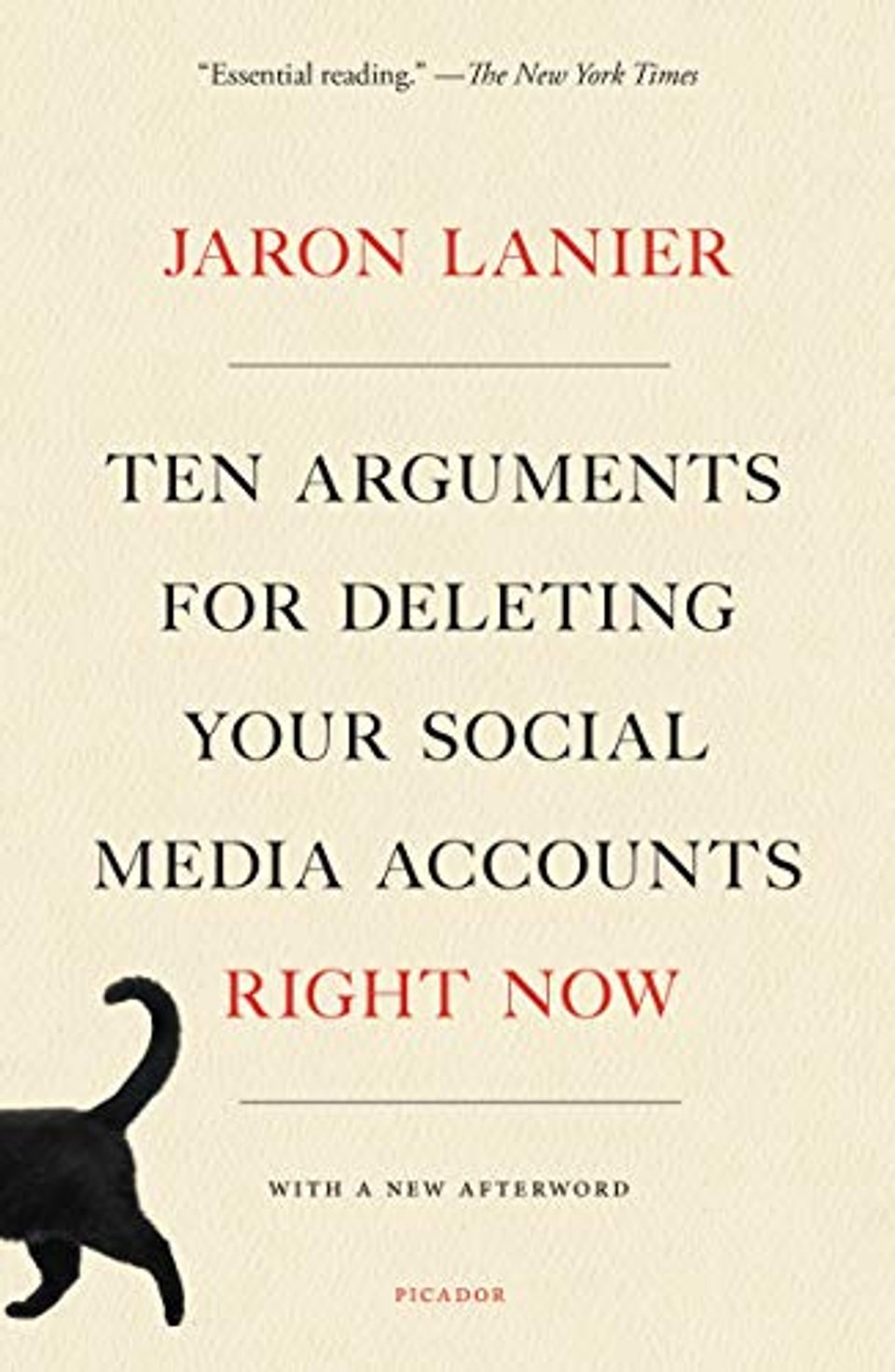
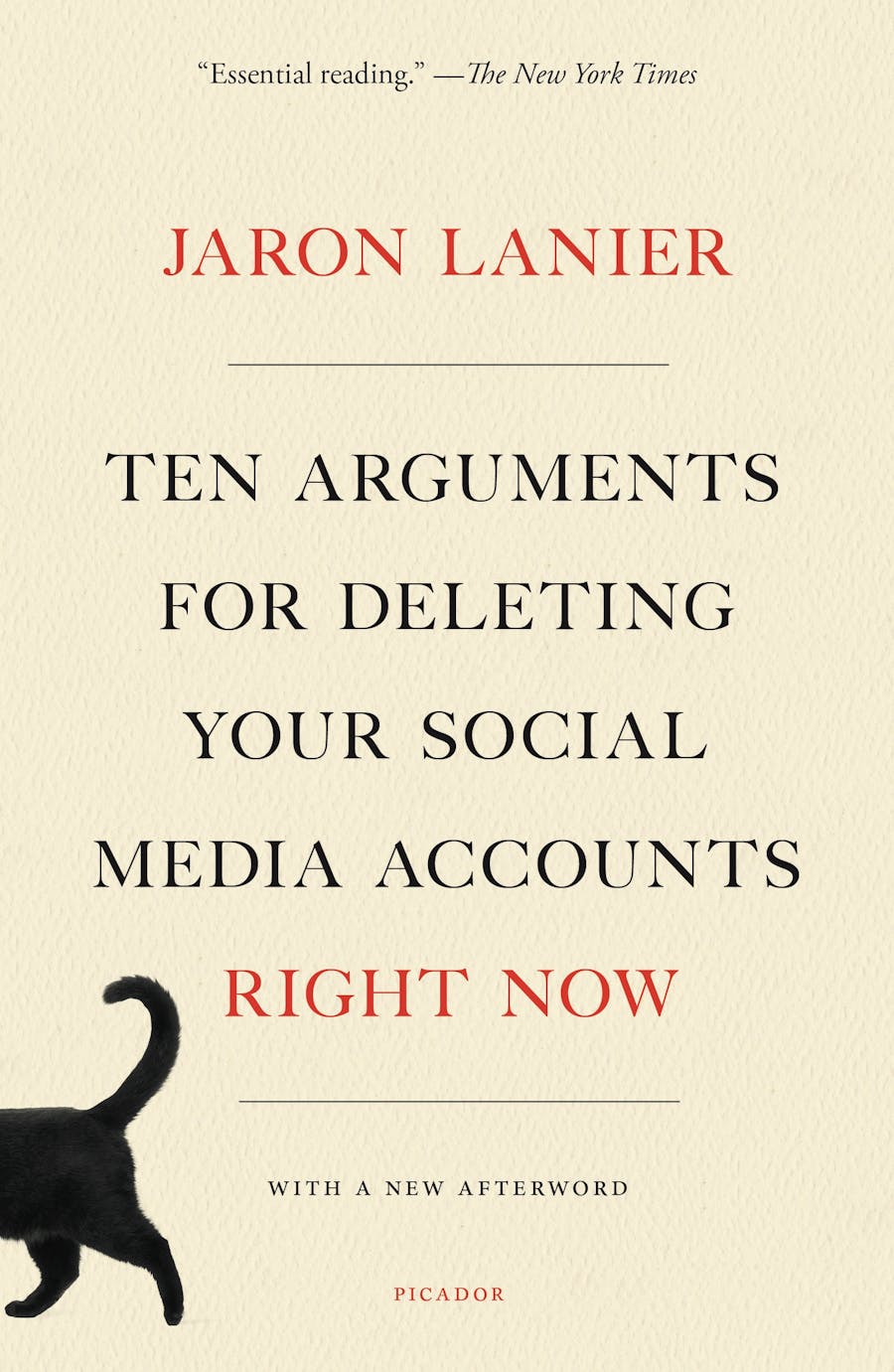
Two years ago, I picked up this book 10 Arguments For Deleting Your Social Media Accounts Right Now after rewatching the Netflix Documentary “The Social Dilemma”. It is one of the many pieces of content I consumed since that inspired, informed, and motivated me to take action not just in my home but to share my thoughts and try to help others who feel overwhelmed, stuck, and struggle with what they should do not just for themselves but for the families as well.
I will state that this book was a tough read for me. Not sure if it was the writing style or the simple fact that Jaron dives deeply into the algorithms and how they work.
Needless to that I would encourage everyone to take time to read this especially now considering the climate online as well as the path we are on around content generated by artificial intelligence.
Here is what I have taken from Jaron’s book and what I worry when I’m on social media and what I weigh when consider giving access to my kids.
Losing Our Free Will to Algorithms and Profits
Maybe the most subtle impact of social media is how it reshapes what we pay attention to. These platforms aren’t designed to help us grow closer to what matters they’re designed to keep us scrolling.
I removed the apps from my phone. Now I only access platforms on a PC in my office and a tablet that usually sits down there too. It’s a small step, but it’s one toward reclaiming attention that was being nudged not by intention and curiosity but by code optimized to keep me scrolling longer and longer.
Jumping back to Netflix Documentary “The Social Dilemma” a former Facebook Executive stated “Let’s figure out how to get as much of this person’s attention as we can…”
Bo Burnam said it best in this panel.
“They are now trying to colonize every minute of your life, that is what these people are trying to do. Every single free moment you have is a moment you could be looking at your phone, and they could be gathering information to target ads at you. That’s what’s happening,”
https://youtu.be/slwXztSAMCk?si=fOal-blLvSqGdtkB
I feel like we forget that these platforms are in the business of making money. They are successful and profitable when we stay engaged and scrolling, commenting, or posting. So as such there is no such thing as “bad press” and regardless of the context, benefit, or detractors. If it keeps you engaged and coming back, they are achieving their objective.
The Real Cost of Scrolling During COVID and Beyond
Scrolling became my default escape and not always a healthy one. The promise was that I’d be entertained, connected, informed. But the real experience was often the opposite: shortened attention, more anxiety, more distraction, and stress that didn’t feel worth the seemingly endless feed.
Just look at the news over the past six years. Millennials and GenZ especially are experiencing more and more doom and gloom than ever before. Then you have the comparison trap. Everyone presents themselves as their best version that no one can live up to.
At times it tilted me inward comparing, evaluating, measuring my life against highlight reels. And what Lanier’s argument makes clear is that this isn’t accidental — it’s engineered to be addictive.
Social Media Is Making Us Meaner
One unmistakable effect I’ve noticed — both in myself and others is how quickly discourse turns sharp, defensive, or hostile online. The architecture of these platforms’ rewards conflict. Negativity spreads faster than kindness because it keeps us emotionally hooked.
But here’s the thing: in real conversations the face‑to‑face kind I find people are far more measured, open, and empathetic than what we see in comment sections and reposts.
That tells me something important: social media isn’t just a neutral tool it’s pushing behaviors that don’t reflect our best selves.
Now that is not to say that when there is wrong in the world. Iran cutting off the internet access to is country to try and limit the disclosure of protests is wrong. When things occur in our own cities and schools, we should be able to call them out. But as a believer we should do so from a place of grace.
- “Speak the truth in love” (Ephesians 4:15)
- “Be quick to hear, slow to speak, slow to anger” (James 1:19–20)
- “Do not repay evil for evil… if possible… live peaceably with all” (Romans 12:17–18)
We’re Losing Our Capacity for Empathy
There’s an element of humanity that shrinks when we hide behind screens.
Real people are more than usernames and reaction GIFs. They are spouses, parents, siblings, friends just like you and me. They are all trying to provide for their families, themselves, and have things that break that they need to fix. We have more in common than we often realize. Watching a clip of a tragedy or argument doesn’t give us the context, the history, the emotional gravity of a real human life yet clips get shared as though they’re the full story.
Too often, we forget that whoever is on the other side of a profile photo deserves our empathy and that empathy doesn’t grow in the fertile soil of ranking systems and virality. We view them as the enemy. Rhetoric often times online makes it feel as though the other person in the enemy, and we are at War.
It Makes Us Unhappy And Distracted From What Matters
There’s a saying: “Comparison is the thief of joy.”
When our attention is continually being pulled toward what others are doing, how they look, how they perform, we stray from living grounded in our own purpose. For me, that purpose is rooted in faith and an upward focus toward Christ not a sideways comparison of lifestyles and achievements.
When you stop chasing trends and metrics, you begin to rediscover tranquility, gratitude, and contentment things social media, by design, doesn’t prioritize.
There Is Good But It’s Intent‑Dependent
Let’s be fair: social media isn’t all negative. I’ve seen people like Justin Nunley’s use platforms to rally support for families facing extraordinary medical challenges. When someone says, “Y’all know what to do,” and followers step up with real help, that’s power used for good.
- His ask to followers: https://www.instagram.com/reel/DStz7kiDN9f/?utm_source=ig_web_copy_link&igsh=MzRlODBiNWFlZA==
- Outcome: https://www.instagram.com/reel/DSv1gAYjC20/?utm_source=ig_web_copy_link&igsh=MzRlODBiNWFlZA==
But here’s where nuance matters: it’s not the platform that’s heroic it’s the intent of the people behind the posts.
Social media doesn’t inherently elevate good intentions it amplifies what gets reaction.
The False Reality of Algorithms
Another dimension people overlook is how algorithms tailor our experience.
They don’t show us what’s true they show us what keeps us engaged. That means we can live in very different digital worlds each convinced that the other is uninformed or even dangerous.
The result? Polarization. Misunderstanding. And less patience for real, compassionate conversation.
When We Define Freedom Beyond the Feed
So what does freedom look like in the age of algorithms?
For me, it’s:
- Reading more and letting deep ideas settle.
- Real conversations not comment threads.
- Questioning assumptions instead of reacting instantly.
- Embracing solitude not just as silence, but as sharpening of attention.
Cal Newport talks about in his book Digital Minimalism “solitude deprivation” a world where we are always connected but rarely alone with our thoughts. Freedom starts the moment we reclaim that inner space.
If we are constantly taking in information and do not allow time to truly process it all. Really decide how we feel and think about what was consumed we’re going to be overloaded, overstimulated, and essentially running our brains RPMs in the read constantly.
A Practical Shift Toward Peace
What I have found is that with less social media in my daily routine, I notice:
- Less stress
- Greater focus
- More presence with family
- More engagement with scripture
And I don’t have life all figured out but I do know this: the more I engage with what matters, the less the noise has power over me.
The idea of “deleting social media forever” can feel overwhelming. And even unrealistic depending upon your career. But transformation doesn’t require dramatic leaps just intentional steps:
- Try a social‑free hour each day.
- Journal your thoughts during that time.
- Walk outside.
- Talk to someone in real life.
- Partner with someone else trying the same thing.
You might be surprised how liberating it feels to step back not from connection but from distraction.
 TMGT
TMGT 
Leave a comment